RMC Supply Model for Large Projects: How to Choose | Classic RMC
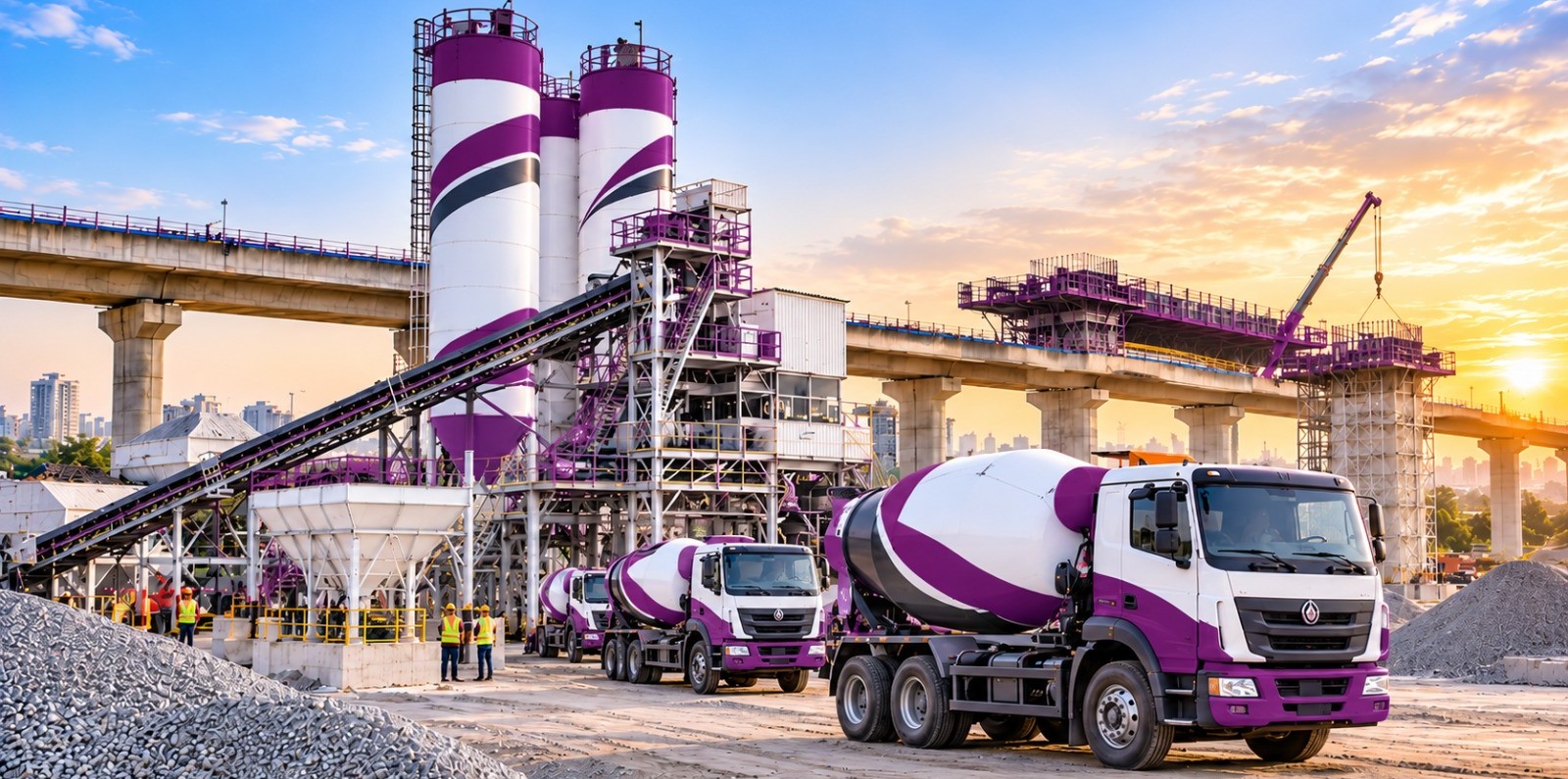
On a large project, concrete is not just a material it is the pace-setter. A metro viaduct, an expressway package, a high-rise tower or an industrial plant can pour thousands of cubic metres a month, and every delayed transit mixer means idle crews, cold joints and missed milestones.
That is why the most important concrete decision is often made before the first pour: which RMC supply model will the project use? Choosing correctly protects your schedule, quality and budget. Choosing wrongly can cost far more than the price difference per cubic metre.
In this guide, we break down the three main RMC supply models, the factors that decide between them, and a simple framework project teams can use to choose with confidence.
What Is an RMC Supply Model?
An RMC supply model is the arrangement through which ready mix concrete reaches your site where it is batched, who operates the plant, how it is delivered, and how quality is controlled. For large projects, there are three common options:
- Commercial (central) RMC plant supply concrete is batched at an existing commercial plant and delivered by transit mixers.
- Dedicated RMC plant (site / captive batching plant) a batching plant is set up at or near the project, serving that project only, operated by the RMC partner.
- Hybrid model a dedicated plant handles bulk volumes, with commercial plants as backup or for peak demand.
Model 1: Commercial RMC Plant Supply
This is the default for most building projects. You place orders, and concrete arrives from the supplier’s nearest plant.
Works best when:
- Total project volume is moderate
- The site is within a reasonable travel time from the plant
- Pours are intermittent rather than continuous
- There is no space on site for a plant
Limitations on large projects:
- Your pours share plant capacity with other customers
- City traffic, entry restrictions and long haul distances affect arrival times and slump retention
- Less control over night pours and long continuous pours like raft foundations
Model 2: Dedicated RMC Plant (On-Site or Near-Site Batching Plant)
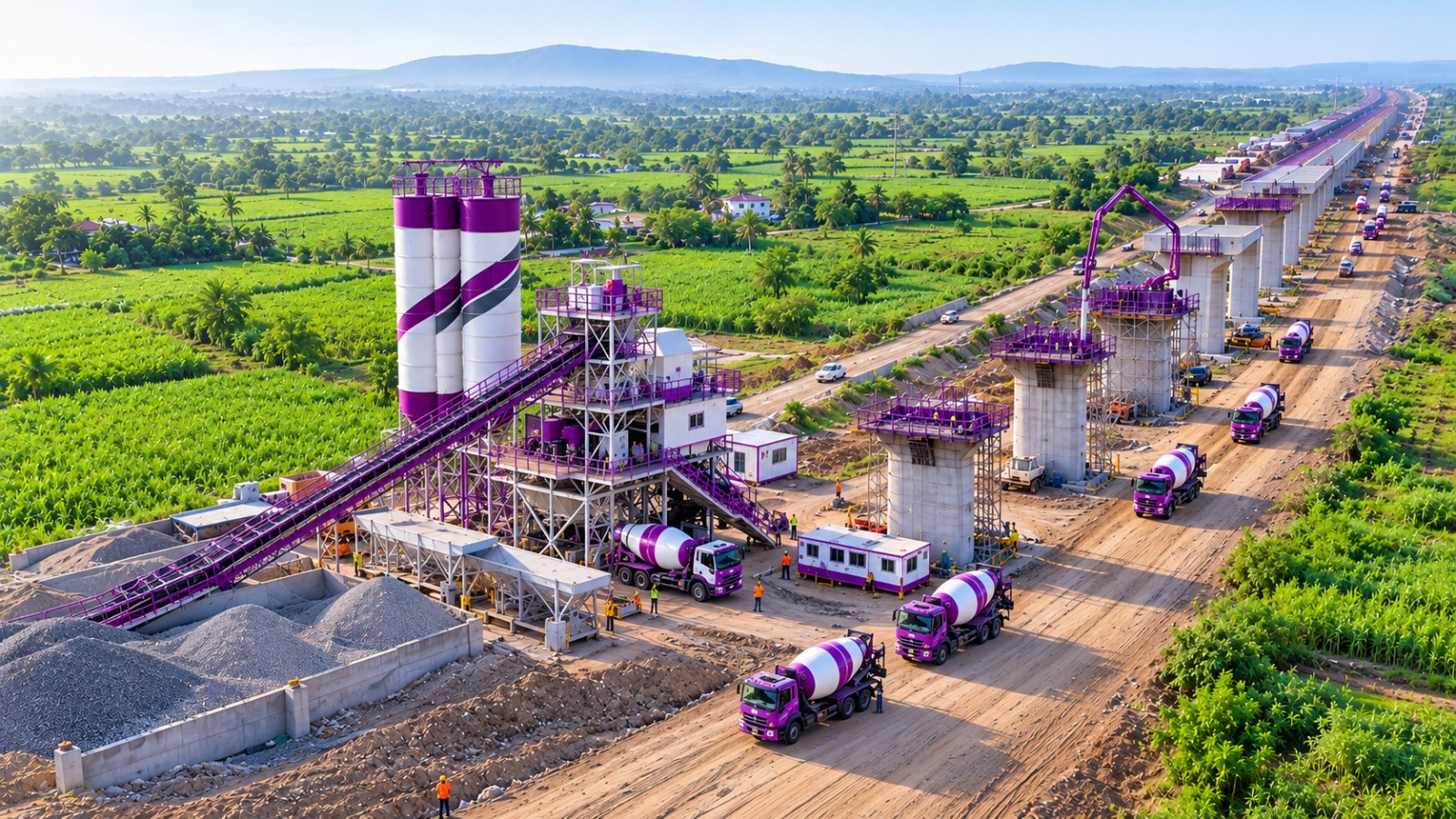
Here, the RMC partner installs and runs a batching plant exclusively for your project on site, or at a nearby location along the alignment for linear projects like roads, railways and metros.
Works best when:
- Concrete demand is high and sustained over many months
- The project is remote, linear or spread over a long stretch
- Continuous or mass pours are frequent (rafts, piers, decks, track slabs)
- Specifications are demanding high-grade, self-compacting or special mixes
- The project cannot afford supply interruptions
Key advantages:
- Assured capacity: the plant works to your pour schedule, not a shared queue
- Shorter haul, better quality: less travel time means better workability and fewer rejected loads
- 24×7 readiness: night pours and long pours become easier to plan
- Consistent quality control: dedicated material stockpiles, on-site lab testing and project-specific mix designs
- Lower logistics risk: reduced dependence on city traffic and long-distance trucking
What to plan for: land or space for the plant, utilities (power, water), mobilisation time, and a minimum project volume and duration that justifies set-up.
Model 3: Hybrid Supply
Many large projects use a dedicated plant as the primary source and a commercial plant as backup. This covers peak pours, plant maintenance windows or early works before the dedicated plant is commissioned.
A hybrid model is especially useful for multi-phase townships, large industrial campuses and infrastructure packages where demand rises and falls across the project life.
7 Factors That Decide the Right RMC Supply Model
1. Total Volume and Monthly Peak
Start with the numbers: total concrete quantity and the peak monthly requirement. High, sustained volumes generally favour a dedicated plant. Small or irregular volumes favour commercial supply.
2. Project Duration
A dedicated plant needs time to mobilise and commission. The longer the concrete-intensive phase, the more value a dedicated set-up delivers.
3. Site Location and Haul Distance
Measure realistic travel time not just distance from the nearest commercial plant, including peak-hour traffic and entry restrictions. Remote or linear projects almost always benefit from a dedicated plant.
4. Pour Profile
Are pours continuous and large (foundations, bridge decks, track works) or small and frequent (slabs, columns)? Continuous mass pours need guaranteed output and are risky with a shared plant.
5. Concrete Grades and Specifications
High-strength grades, self-compacting concrete, fibre-reinforced mixes or strict durability specs need tight quality control. A dedicated plant with an on-site lab makes this easier to maintain.
6. Space, Power and Approvals
Check whether there is space for the plant, aggregate stockpiles and transit mixer movement, plus power, water and local permissions. If site space is tight, a near-site location can work.
7. Total Cost of Supply — Not Just Rate per m³
Compare total cost: concrete rate, wastage, rejected loads, idle labour and equipment, delay risk and schedule impact. On large projects, reliability often saves more than a lower per-cubic-metre rate.
Quick Decision Framework
| Project situation | Recommended RMC supply model |
|---|---|
| Moderate volume, urban site close to a commercial plant | Commercial RMC supply |
| High, sustained volume over a long period | Dedicated RMC plant |
| Linear project (expressway, metro, rail, pipeline) | Dedicated plant(s) along the alignment |
| Frequent mass or continuous pours | Dedicated RMC plant |
| Special or high-grade mixes with strict QC | Dedicated plant with on-site lab |
| Phased project with fluctuating demand | Hybrid model |
Questions to Ask Your RMC Partner Before You Decide
- What is your experience running dedicated plants on large projects?
- What plant capacity and how many transit mixers can you commit?
- How quickly can the plant be mobilised and commissioned?
- What quality control systems and lab testing will be on site?
- What is the backup plan during breakdowns or maintenance?
- How will delivery be tracked and scheduled?
Why Large Projects Choose Classic RMC
Since 2013, Classic RMC has grown from its first dedicated RMC plant in Mumbai to supporting some of India’s most demanding infrastructure projects including the Mumbai–Ahmedabad High-Speed Rail, Mumbai Metro Line 3 (underground track works) and the Mumbai–Nagpur Samruddhi Expressway, where our work was recognised with a Best Performance award from AFCONS.
- 35+ lakh m³ of concrete supplied
- 75+ transit mixers and tech-enabled logistics
- 200+ strong experienced team
- Dedicated, commercial and hybrid supply models tailored to each project
Explore our work on the Projects page or learn more about Classic RMC & Infrastructure.
Frequently Asked Questions
1. What is a dedicated RMC plant?
A dedicated RMC plant is a batching plant set up at or near a project site that supplies concrete only to that project, giving assured capacity, shorter delivery times and tighter quality control.
2. When should a project choose a dedicated batching plant over commercial RMC supply?
When concrete demand is high and sustained, the site is far from commercial plants, pours are continuous, or specifications are demanding. Infrastructure and large real estate projects commonly fall into this category.
3. Is a dedicated RMC plant more expensive?
Not necessarily. While there is a set-up component, savings from fewer delays, less wastage, fewer rejected loads and better productivity often make it more economical on large projects.
4. Can a dedicated plant be set up for linear projects like highways and metros?
Yes. Plants are usually positioned along the alignment to keep haul distances short. Classic RMC has supported expressway, metro and high-speed rail projects this way.
5. Which areas does Classic RMC serve?
Classic RMC is based in Navi Mumbai and serves Mumbai, Navi Mumbai, Thane and Panvel, and sets up dedicated plants for large projects across India.
Planning a Large Project? Talk to Us About a Dedicated RMC Plant
Share your project location, total volume, timeline and concrete grades, and our team will recommend the right supply model, including a dedicated batching plant set-up.
For our free quote: 📞 +91 8433730625 | ✉️ info@classicrmc.com | Send an enquiry
GET IN TOUCH
- Navi Mumbai
- +91 8433730625
- info@classicrmc.com
Table of Contents
Toggle